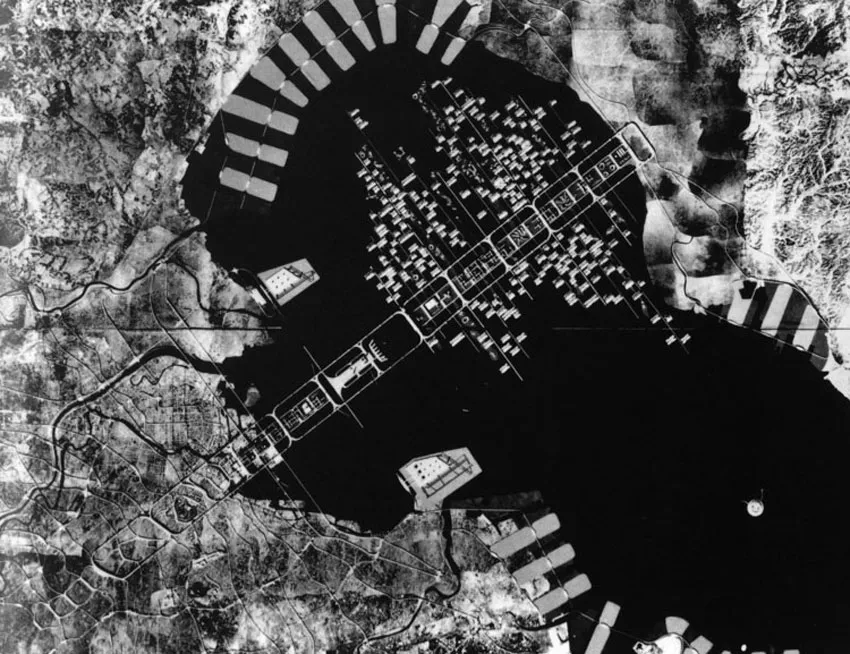
Fig 1: Plan for Tokyo 1960, Kenzo Tange (Plan for Tokyo 1960 / Kenzo Tange)
(10 minute read)
The later-adopted name of the Metabolist group, Shinchintaisha, translates to ‘metabolism,’ as well as ‘renewal’ or ‘regeneration’. Kenzo Tange’s Tokyo Bay Plan 1960, pictured above, was to be this ‘renewal’ of the city as it explored a radically new urban typology capable of adapting and changing in ways the existing city could not. Metabolist philosophy understood that the postwar loss of physical context could be an opportunity to embrace new technology through improved urban typologies. The plan would have seen Tokyo extend out across the bay in a megastructure that could be easily traversed and expanded as needed, its modular design allowing for extension in growth and replacement in obsolescence. Through an investigation of Tange’s Tokyo Bay Plan, this essay seeks to understand the intentions and ideals the Metabolist movement embodied, the context from which it emerged, and the factors behind its eventual dissolution.
i: Understanding Metabolism
Formed in the late 1950s by Japanese architects and writers, the Metabolist group investigated “how buildings can change, grow and evolve”, drawing from an increasing interest in biological function and self-regulation, and how it could provide architectural resilience (Moreno, 2021). Defined by Cemaliye Eken and Alpar Atun Resmive (2019) this architectural ‘resilience’ describes “the capacity of a system to cope with external stresses in case of a disturbance.” “External stresses” were of particular relevance to the postwar Japanese architects working in the aftermath of bombing, occupation, and with looming threat of further nuclear destruction from The Cold War. The ability for an urban system to self-regulate and recover itself became an attractive prospect; more than a way to protect architectural legacy, it would ensure an enduring urban fabric for Japanese society.
Metabolist architecture advocated for “a balance between change and preservation as expressed in the design of different life cycles of infrastructures and individual cells” (Schalk, 2014, p.281). Two types of “space units, […] those of a permanent character and the flexible zones” would comprise a system that could change as needed, within the controlled predictability of a structure (Plan for Tokyo 1960 / Kenzo Tange, 2022). These two parts, infrastructure and cells, together form ‘plug-in megastructures’, where modular architecture could be inserted, replaced, and changed over time within a larger, ordered structure – the key concept behind Metabolist resilience.
Scientifically, ‘metabolism’ refers to the process of “cells adapting and moving to sustain life”, but the original Japanese offers “a spiritual perspective closest to the Buddhist concept of impermanence”; it offers an acceptance of change and transformation, even at the cost of losing what was before (Moreno, 2021).
Metabolist architecture is often critiqued for lacking context, its projects appearing not to acknowledge site history – what was before – or even physical, topographic context, simply starting from ‘ground zero’, but it was only in Japan’s cultural context, where cities were noticeably failing, that such radical proposals could have been conceived. “Ironically, it is the very denial of time and place that gives Metabolism its meaning in postwar Japan” Cherie Wendelken (2001, p. 280) remarks, explaining that the “particular circumstances of urban and cultural crisis in postwar Japan” led to “a form of cultural nihilism that developed out of the trauma of defeat”. Destruction and inadequacy of the existing city gave architects little incentive to acknowledge physical context, so they instead “constructed meaning out of […] the loss of identity”, accepting loss and defiantly attempting to generate new typologies that would properly support Tokyo’s population in the future (Wendelken, 2001, p. 280). Isozaki’s drawings, exampled in Figure 2 below, portray the nihilism of lost city fabric, and predict a similar future collapse of Metabolism.
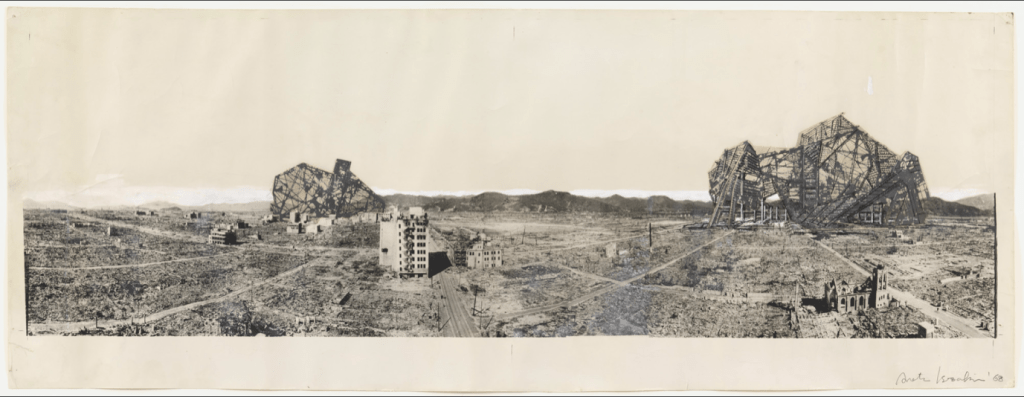
Fig 2: Arata Isozaki’s Hiroshima Blast Site: Electric City (1968)
ii: Organisation
The Tokyo Bay Plan, 1960, is considered to be one of the most thoroughly developed of the Metabolist urban proposals, demonstrating how “the idea of ‘city as a process’” could be manifested in an architectural language (Lin, 2007). Principally, the proposal sought to provide increased mobility and a new, more efficient way for the city to change and grow. Linear decentralisation was to be the solution to sustainable, continued urban growth. A focused civic axis would provide some functional zoning, but the city would largely be decentralised, and therefore able to grow indefinitely without risking further spatial detachment from urban sprawl.
Connecting into existing road networks, two parallel highways formed a spine across the bay which was to house the civic buildings. From this, a network of perpendicularly extending branches were to house domestic buildings, the network able to expand laterally to meet growth demand. The decentralisation of conurbations intended to prevent any one area from becoming too isolated from civic facilities.
Metabolism’s urban organisation can in some ways be seen as the climax of a radical, functionalist movement that had begun in prewar modernism, emerging from the work of Team Ten, and, before that, CIAM, the Congrès Internationaux d’Architecture Moderne. CIAM, an institution of modernist architects, popularised notions of urban efficiency through functional zoning when in The Charter of Athens (1933) they advocated “strict division of functional zones according to the four main components of the city: living, working, recreation and circulation” (Lin, 2008). The charter was published on behalf of the group by Le Corbusier who was himself a key proponent of modernist city zoning, demonstrated in several unrealised projects such as his 1925 Paris Plan and La Ville Radieuse (1930) that saw car-centric highway systems link separated functional zones of the city (Rodriguez-Lora, Navas-Carrillo and Pérez-Cano, 2021).
Following the war, CIAM was led by its younger members who eventually formed Team Ten, as they sought to rectify the “excessive rationalisation” of CIAM that had “no relation to the identity of the dwellers” (Gonsales, 2011, p. 101).
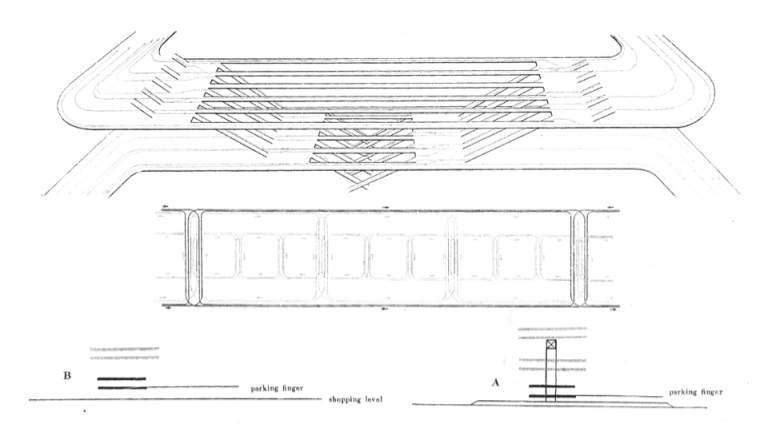
Fig 3: Kenzō Tange, A Plan for Tokyo, Diagram of transportation infrastructure (Cho, 2018)
Tange’s Plan for Tokyo uses CIAM’s model of hierarchical organisation mapped around a rigidly ordered highway system, but it also demonstrates Team Ten’s sensitivity towards the quality of the environment, ensuring inhabitants were not alienated by a network of highways imposed on the public realm. The gridded traffic circulation system of Tange’s proposal was to be detached from the groundplane, raised 40m in the air, deliberately separating pedestrian and vehicular networks, and creating nested urban scales.
iii: Mobility and Scale
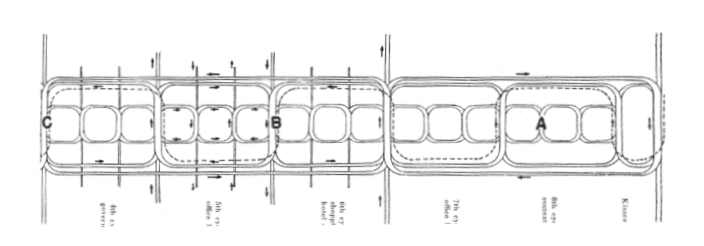
Fig 4: Kenzō Tange, A Plan for Tokyo, Diagram of transportation infrastructure (Cho, 2018)
While the traffic grid is arranged in squares of 1km sides, walkable “cores” were created on grid axes measuring between 150m and 200m on reclaimed squares of the Bay’s seafloor. Recent research has confirmed “the positive effect of small block size over urban vitality”, particularly of blocks smaller than 0.06km2, which Tange’s walkable “cores” would have been (Xiaoyu et al., 2021). Thus, Tange’s design at several scales could also have represented an increase in urban vitality at a pedestrian scale, despite implementation of huge vehicular infrastructure.
The proposal is visually defined by its monumentality and linear civic axis which were Tange’s attempt to “encourage spontaneous mobility” and “transform the current radial centripetal structure” of Tokyo which he described as a “closed structure” (Lin, 2007). Japan’s postwar economic resurgence in the 1950s had caused a further acceleration in urbanisation and cities faced a mass-migratory phenomenon, though Tokyo “continued to develop in a piecemeal fashion without any effective reorganization of urban layout” (Lin, 2010, pp. 133-134). Tokyo’s existing transport infrastructure, which could not cope with its rapid expansion, “caused severe traffic congestion and eventually harmed the country’s economic productivity” (Cho, 2018, p. 140). Undeveloped infrastructure, overabundance of automobiles, and a rapidly growing demand for housing prompted a dramatic revision of outdated urban models. Through Tange’s exploration of a decentralised urban model, he offers a Technocratic Megastructure to be Tokyo’s solution, asserting that a mega-scale holistic design approach could foresee and adapt to future demands.
iv: The Megastructure
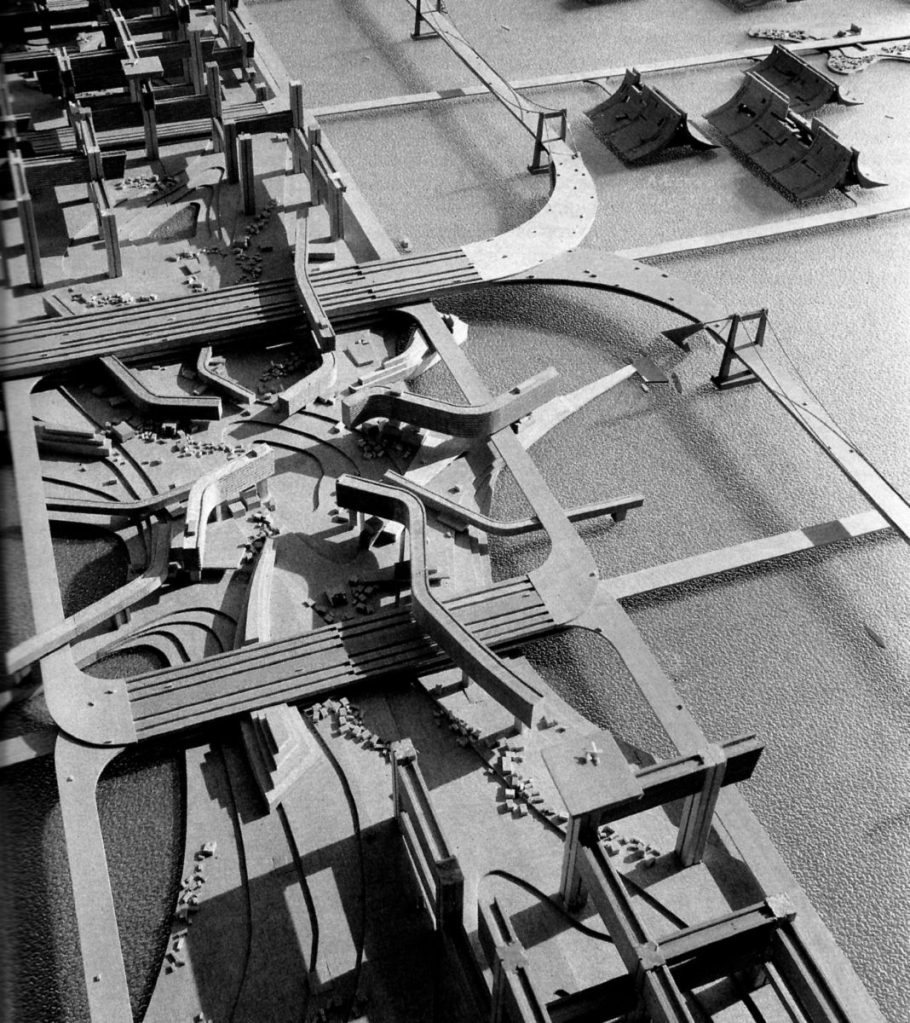
Fig 5: Perspective Model Photo, Plan for Tokyo Bay (Mead, 2019)
Emerging in parallel with other European Megastructure proposals, many of the Metabolist schemes investigated self-sufficiency and spatial organisation at an urban scale. Described as a “Comprehensive City” in Rayner Banham’s 1976 book, Megastructure (p. 196), alongside futuristic Archigram proposals, “the plug-in concept […] was slowly transformed into an urbanistic concept” where boundaries between building and city architecture became blurred (Senk, 2013, p. 1). Dutch Structuralism, explored concurrently to Team Ten’s work on urbanism, claimed that “architecture could not be uncoupled from urbanism”, a theory termed “Total Urbanisation” (Heuvel, 2017). Tange, a member of Team Ten, goes on to propose that “the speed and scale that automobiles had introduced into urban life were changing people’s perception of space” and would “destroy the existing spatial order of the city” requiring a significantly larger scale of design (Lin, 2007, p. 112; Cho, 2018, pp. 140-141).
Principles of modularity and self-sufficiency could only be scaled up to urban magnitudes with the accelerated development of technology occurring at the time. The understanding that “technological priorities in the organization of architectural space make it possible to [solve] applied and practical problems of architectural activity” gave Metabolists the incentive to create technocratic architectural systems (Pleshivtsev and Pakunova, 2021). Urban technology would provide support and feedback that would help society “adjust to an un(expected) acceleration of modern life and a different understanding of the urban regime role” (Vujadinović and Perović, 2021, p. 123).
Team Ten also explored ideas of Systems Theory within urban design, ideas of self- regulation and decentralised, democratic architecture that would inherently facilitate change over time. This had grown out of Norbert Weiner’s earlier work, published in Cybernetics (1948, pp. 16-18) that attempted to understand relationships of communication, control and order within systems. Technocratic architecture, governed by science and technology, could employ cybernetic communication to form the cohesive and connected urbanism required of such monumentality. Growing beyond CIAM’s zoned urban plans, Tange’s Metabolist, technocratic vision for Tokyo would make each plug-in module of each ‘zone’ a crucial part of the whole, the system working to stabilise and support an indefinite future of change.
v: Marine Urbanism
Kenzo Tange was not the first Metabolist architect to propose a water-based project to address urban sprawl. Kiyonori Kikutake’s Marine City (1958) and Kisho Kurokawa’s Floating City (1961) both proposed water-based urbanisms, both receiving criticism and neither coming to fruition. Use of the ocean as a contextless, undeveloped setting for more sustainable expansion of cities was a Metabolist reaction to socio-cultural conditions, the increasingly problematic growth and congestion of cities forcing an alternative. Japan’s reindustrialisation and economic boom made Tange’s Tokyo plan a feasible solution, where fragmented land ownership made terrestrial urban planning more problematic (Heubner, 2021). A monolithic, marine-based ‘ground zero’ could provide the space for a controlled increase in population density and an easier way to overhaul Tokyo’s transport infrastructure.
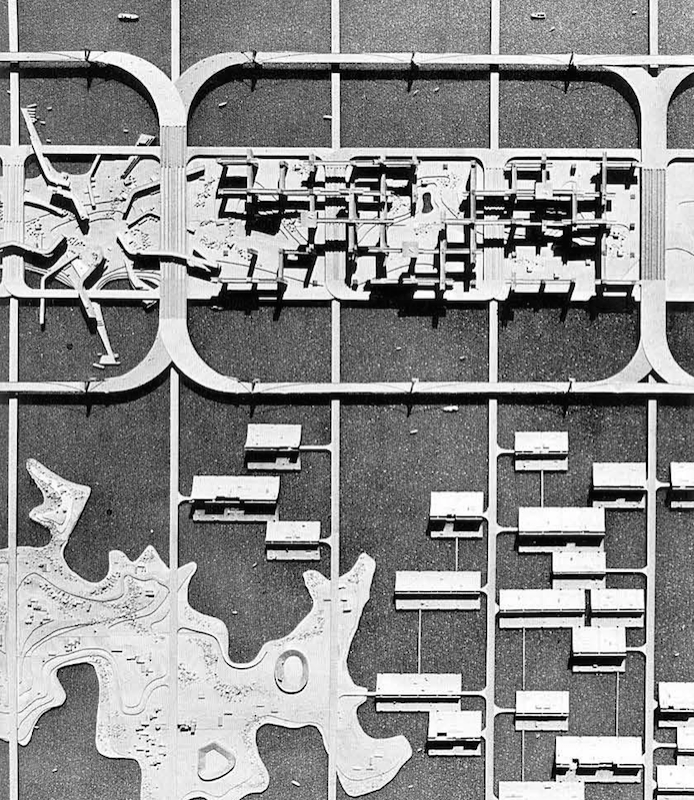
Fig 6: A Plan for Tokyo 1960, detail (Florian Urban, 2012)
Tange, drawing from Corbusier’s earlier work, created transportation networks where “flow of traffic meets with stable architectural space” to separate the vehicle from the pedestrian (Lin, 2007, p. 112). However, to engage with the architectural framework at all, as shown in Figure 6 above, the strategy necessitated reliance on cars and uninhabitable highway architecture to navigate between the constructed islands in the sea. Jane Jacobs, a North American journalist fighting against expressways in the 1960s, writes that “cities have much more intricate and social concerns than automobile traffic”, claiming streets have greater, more numerous functions than just mobility (Jacobs, 1961, pp. 16-18). While Tange’s proposal had a hierarchy of scales, some pedestrian, his ambition to create a ‘new spatial order’ more suited to the automobile would have created economically and socially inactive environments. Without terraforming the bay, the urban fabric is incomplete and broken; Marine Urbanism necessarily lacks context, commerce and pedestrian presence – all key to urban vitality.
vi: Further Criticism
Disillusioned of technoutopic futures, in the same way Jane Jacobs understood the detrimental role of highways, media understood the excessive functionalism of modular architecture, described as the “sad shell of the over-worked, isolated male drone of corporate Japan”, was a further detriment of the Metabolist style (Wendelken, 2001, p. 296). Furthermore, there was a growing concern that over-reliance on technology and communication systems would create a similarly sterile and brutally functionalist urban condition. The immense scale of Tange’s Bay Plan required a level of technological reliance but “boundless faith in technics and technology often leads into technicism and technolatery”, where settlements become instruments and facilities, loosing “the peculiarity of an urban type of settlement” (Vujadinović and Perović, 2021, p. 123). The Plan for Tokyo Bay, though making provisions for automobiles and expansion, did not provide individual freedom and the ability to facilitate urban uniqueness, or ‘peculiarity’, in the way modular architecture theory had glamourised.
Stalled by social protest, large-scale urban renewal was still far off when in 1973 the Oil Shock “brought the frenzied pace of postwar reconstruction to a halt” (Wendelken, 2001, p. 296). By the time Japan enjoyed renewed prosperity of the 80s, Metabolism had lost influence and ‘local tasks’, referred to as ‘postmetabolism’, were more affordable and manageable (Konovalova, 2019).
vii: Conclusion
Kenzo Tange’s Tokyo Bay Plan was a well-developed, rational response to Tokyo’s urban crisis, drawing from European and Japanese architectural contexts, and addressing Tokyo’s specific weaknesses amid unprecedented growth and, while unbuilt, it provided a seminal touchstone for Metabolist urbanism to follow. However, from the monotonous highway systems to its modularity and (over-)reliance on technology, the Metabolist ideals were protested at every step. To appease these critics, the Tokyo Bay Plan would have lost its scale and reimagined city form, relinquishing with it hard-fought urban coherency and connectivity. Fundamentally, it lacked an organic conception, the opportunity for citizens to democratically and individually decide how to make their city. As with many failed urban plans of the 1960s, the authoritarian, top-down urban plan was rejected by the people it would have been imposed upon.
Perhaps the technoutopia that Tange had hoped would help people embrace a changing world was itself too new and too different, and while Tokyo Bay’s Metabolist Megastructure could have facilitated gradual change over time, the first leap was never taken. As such, Tokyo’s famed City on The Sea sits over paper waves, in a paper bay, likely in an archive in present- day Tokyo that is both very different to how it was in 1960, and also much the same.
Bibliography
- Banham, R. (1976) Megastructure. London: Thames and Hudson, p. 196. Available from: https://moodle.nottingham.ac.uk/pluginfile.php/8739277/mod_resource/content/1/banham-megastructures.pdf (Accessed: 10.01.23).
- Cho, H. (2018) ‘Kenzō Tange’s A Plan for Tokyo, 1960: a plan for urban mobility’, Architecture Research Quarterly, Volume 22(2), pp. 140-141. doi: 10.1017/S1359135518000301. Available from: https://www.proquest.com/docview/2117060725?accountid=8018&pq-origsite=primo (Accessed: 11.01.23).
- Eken, C. and Resmive, A. A. (2019) ‘The Self -Organising City and the Architecture of Metabolism: An Architectural Critique on Urban Growth and Reorganisation’ Sustainability, 11(19), Available from: https://www.proquest.com/docview/2398146546?accountid=8018&forcedol=true&pq-origsite=primo (Accessed 09.01.23).
- Florian Urban, (2012) ‘Japanese “Occidentalism” and the Emergence of Postmodern Architecture’, Journal of Architectural Education, Volume 65(2), pp. 98-102. Available from: http://radar.gsa.ac.uk/2783/1/2783_FullTextREF.pdf (Accessed 16.01.23).
- Gonsales, C. (2011) ‘CIAM, Team X and urban space in Brazilian housing communities: The Terras Altas Community in Pelotas’, Arquitecturarevista, Volume 7(2). Available from: https://www.proquest.com/docview/1776699027?accountid=8018&pq-origsite=primo (Accessed: 12.01.23).
- Heuvel, D. van den (2017) ‘Total Space: Considering Dutch Structuralism Today’, Archdaily, Available from: https://www.archdaily.com/805592/total-space-considering-dutch-structuralism-today (Accessed: 11.01.23).
- Huebner, S. (2021) ‘Earth’s Amphibious Transformation: Tange Kenzo, Buckminster Fuller, and marine urbanization in global environmental thought (1950s-present)’, Modern Asian Studies, Volume 56(4). Available from: https://www-cambridge-org.nottingham.idm.oclc.org/core/journals/modern-asian-studies/article/earths-amphibious-transformation-tange-kenzo-buckminster-fuller-and-marine-urbanization-in-global-environmental-thought-1950spresent/AF8097E90D15DDEE7C84E0914CC3CD33 (Accessed: 11.01.23).
- Isozaki, A. (1968) ‘Re-ruined Hiroshima, project, Hiroshima, Japan (Perspective)’, in Lowry, G. D. (2019) MoMA Highlights: 375 Works from The Museum of Modern Art, Available from: https://www.moma.org/collection/works/816 (Accessed 12.01.23).
- Jacobs, J. (1961) The Death and Life of Great American Cities, London: The Bodley Head, pp. 16-18.
- Konovalova, N. (2019) ‘The Architecture of Postmodern Japan: The Main Features’, Advances in Social Science, Education and Humanities Research, Volume 324. Available from: https://www.atlantis-press.com/article/125910029.pdf (Accessed: 16.01.23).
- Lin, Z. (2008) ‘City on the Move: Mobility, Structure and Symbolism in Kenzo Tange’s 1960 Plan for Tokyo’, in Pride, M. (ed.) Seeking The City. p. 448. Available from: https://www.acsa-arch.org/proceedings/Annual%20Meeting%20Proceedings/ACSA.AM.96/ACSA.AM.96.52.pdf (Accessed: 09.10.23)
- Lin, Z. (2007) ‘Urban Structure for the Expanding Metropolis: Kenzo Tange’s 1960 Plan for Tokyo’, Journal of Architectural and Planning Research, Volume 24(2). Available from: https://www.jstor.org/stable/43030795?saml_data=eyJzYW1sVG9rZW4iOiJjMTJlOTUyMy0zYzA3LTRlOTctYWJmZC04ZmQ2YjhlNDNiYWMiLCJlbWFpbCI6ImxheWxiMTZAbm90dGluZ2hhbS5hYy51ayIsImluc3RpdHV0aW9uSWRzIjpbIjU2ZTA2MmUwLTk2OTEtNGZhOC1hZjE4LTllNWVlMTZlMTM0ZCJdfQ&seq=5#metadata_info_tab_contents (Accessed: 11.01.23).
- Lin, Z. (2010) Kenzo Tange and the Metabolist Movement: Urban Utopias of Modern Japan, London: Taylor & Francis Group. Available from: https://ebookcentral.proquest.com/lib/nottingham/reader.action?docID=484779 (Accessed: 11.01.23).
- Mead, N. M. (2019) ‘Unbuilt Tokyo: ‘deathscrapers’ and a million-person pyramid’, The Guardian, Available from: https://www.theguardian.com/cities/2019/jun/11/unbuilt-tokyo-depthscrapers-and-a-million-person-pyramid (Accessed: 16.01.23).
- Moreno, L. (2021) ‘The Metabolist Movement – The promised Tokyo’, Sabukaru Online, Available from: https://sabukaru.online/articles/the-promised-tokyo (Accessed: 09.01.23).
- ‘Plan for Tokyo 1960 / Kenzo Tange’ (2022) Archeyes, Available from: https://archeyes.com/plan-tokyo-1960-kenzo-tange/ (Accessed: 11.10.23).
- Pleshivtsev, A. and Pakunova, T. (2021) ‘Formation and development of technotopia as a concept of the difurative and stylistic direction of innovative architectural activity’, E3S Web Conferences, Volume 224. Available from: https://www.e3s-conferences.org/articles/e3sconf/pdf/2021/20/e3sconf_emmft2020_05015.pdf (Accessed: 11.01.23).
- Rodriguez-Lora, J., Navas-Carrillo, D. and Pérez-Cano, M. T. (2021) ‘Le Corbusier’s urbanism: An urban characterisation of his proposals for inner cities’, Frontiers of Architectural Research, Volume 10(4). Available from: https://www-sciencedirect-com.nottingham.idm.oclc.org/science/article/pii/S2095263521000388#bib25 (Accessed: 09.01.23).
- Schalk, M. (2014) ‘The Architecture of Metabolism. Inventing a Culture of Resilience’, Basel, Volume 3(2), p. 281. doi:10.3390/arts3020279
- Schumpp, M. (1972) ‘Der Bedeutungswandel utopischer Stadtmodelle unter sozialem Aspekt’ in Fachverlag, B. (ed.) Stadtbau-Utopien unt Gesellschaft, Boston: Walter de Gruyter GmbH. Available from: https://www.degruyter.com/document/doi/10.1515/9783035601787.fm/html (Accessed: 16.01.23).
- Senk, P. (2013) ‘The Plug-in Concept: Technology and Aesthetics of Change’, Arhitektura, Raziskave, Volume 2013(1), p. 1. Available from: https://www.proquest.com/docview/1461729034?OpenUrlRefId=info:xri/sid:primo&accountid=8018 (Accessed: 10.01.23).
- Vujadinović, L. and Perović, S. K. (2021) ‘Influence of Technology on Socio-spatial City Development’, Prostor, Volume 29(1). Available from: https://hrcak.srce.hr/file/377469 (Accessed: 11.01.23).
- Wendelken, C. (2001) ‘Putting Metabolism Back in Place’, in Goldhagen, S. W. and Legault, R. (eds.) Anxious Modernisms: Experimentation in Postwar Architectural Culture. Cambridge (MA): The MIT Press. Available from: https://moodle.nottingham.ac.uk/mod/resource/view.php?id=6110628 (Accessed: 03.01.23).
- Wiener, N. (1948) Cybernetics; or, Control and communication in the animal and the machine. [Second edition, 2019 reissue]. Cambridge (MA): The MIT Press. Available from: https://direct-mit-edu.nottingham.idm.oclc.org/books/book/4581/Cybernetics-or-Control-and-Communication-in-the (Accessed: 10.01.23).
- Xiaoyu, G. et al., (2021) ‘Optimal Block Size for Improving Urban Vitality: An Exploratory Analysis with Multiple Vitality Indicators’, Journal of Urban Planning and Development, Volume 147(3). Available from: https://ascelibrary-org.nottingham.idm.oclc.org/doi/full/10.1061/%28ASCE%29UP.1943-5444.0000696 (Accessed 12.01.23).

