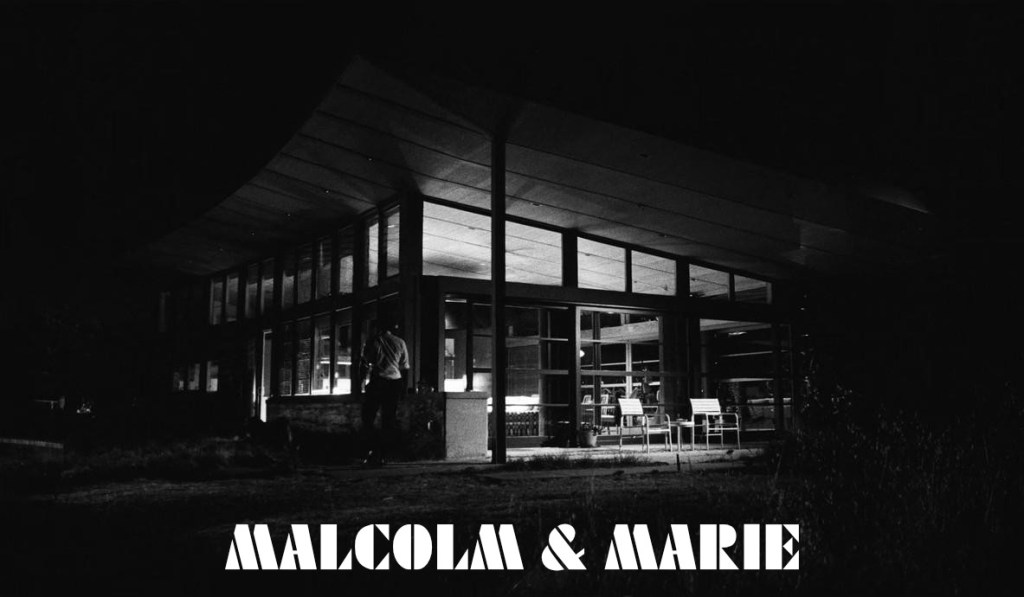
Supporting effortless acting, beautiful cinematography and a nuanced and excruciating script is Caterpillar House, in which the entire film takes place. Malcolm & Marie is one of few films shot entirely on one location which works wonderfully to frame the cutting intimacy of an outpour of bottled grievances after Malcolm’s movie premieres and he forgets to thank Marie.
Much like a stage production, the unchanging environment lets a viewer becomes accustomed with the actors’ spatial frame of reference, allowing blocking and movement around the house to control the pace, dialogue and power shifts of the argument. The house and the actors’ ability to move through it become an integral part of how they chastise, question and rebut each other.
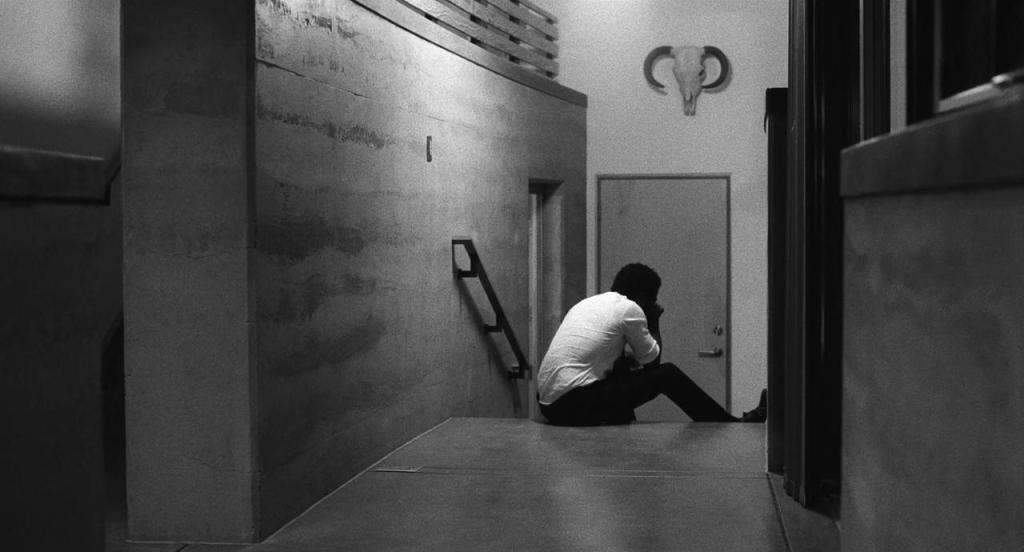
The building that serves as their battleground is the Caterpillar House, a 2010 Californian home by Feldman Architecture, and it’s where Malcolm’s production company has put the couple up. Open kitchen-living spaces denote function with furniture, which sits away from glazed walls that open to the outdoors. Bedrooms and more private, closed-plan spaces open into the corridor that runs as a curving spine along the southern edge of the house. This corridor is heavily trafficked as they follow each other down it, yell to one another through it, and escape uncomfortable accusations at the far end of it.
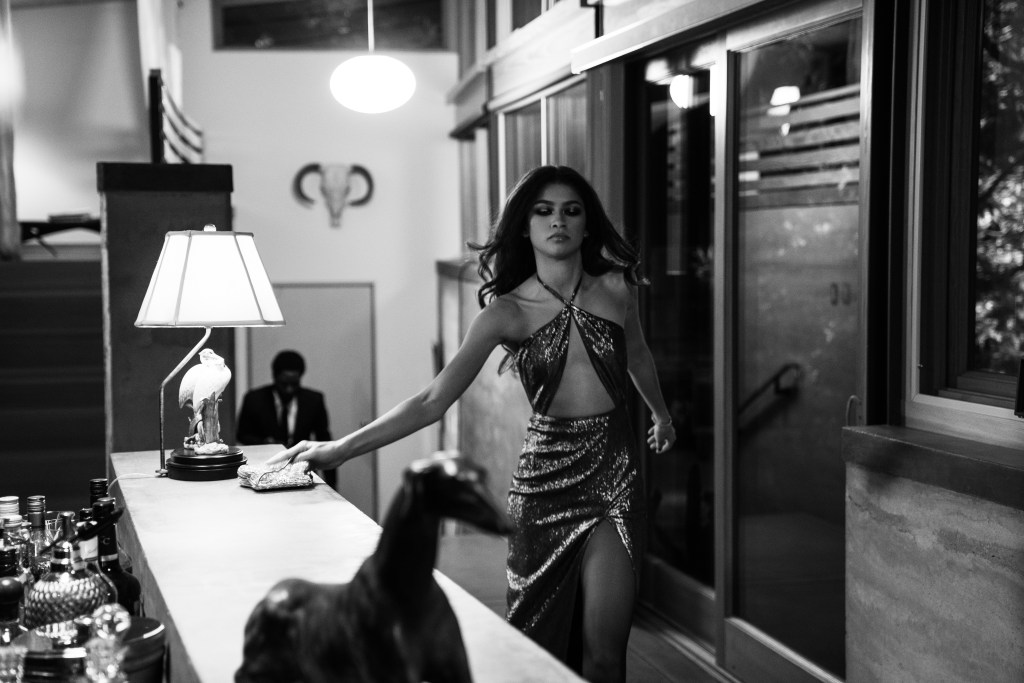
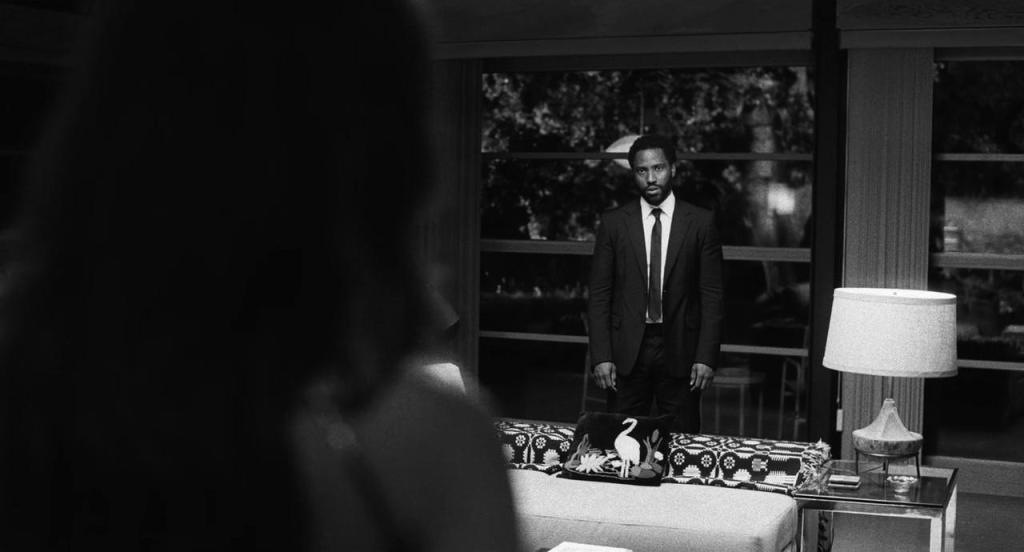
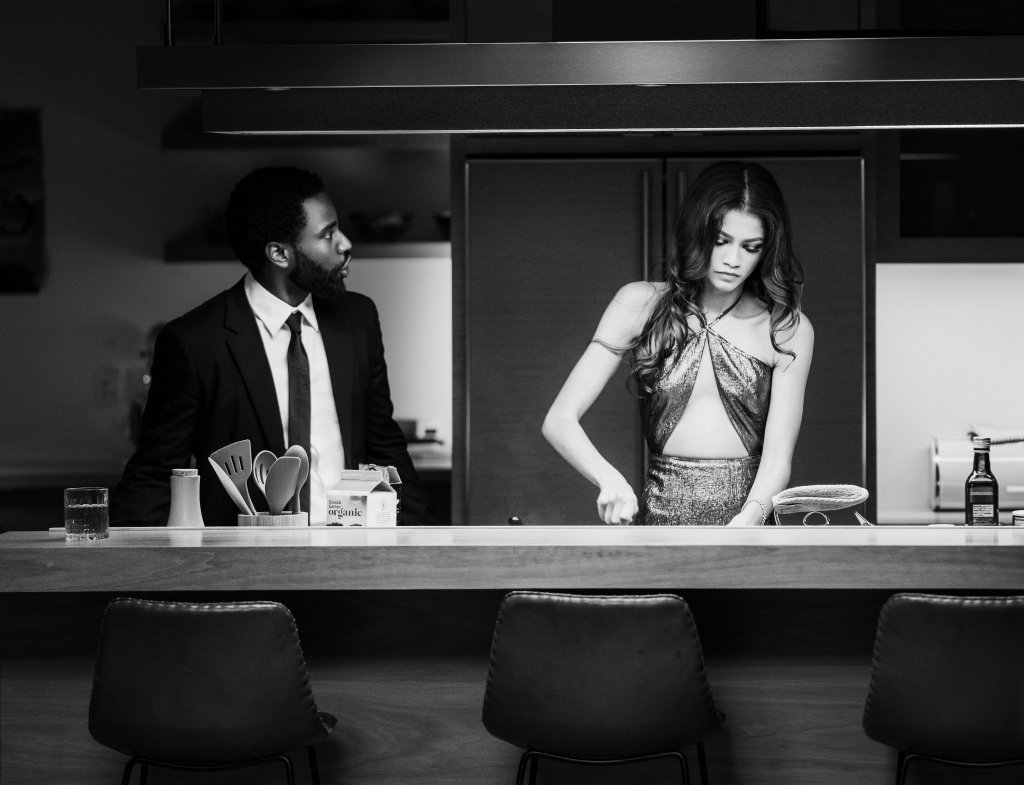
In a Netflix interview, director Sam Levinson describes a spatial language whereby actors “move through [the] house in a way that feels like it’s looping and circuitous,” the continual conflict-resolution cycles Malcolm and Marie go through during the film mirrored in this circular, chasing movement. The first of Malcolm’s monologues takes place as he paces endlessly around their sofa, the camera, somewhat dizzyingly, following him back and forth from outside. As the house traps them in circles and structures their interactions, the couple then pursue one another around the kitchen island, and the bar, looping over old arguments and around the house, and going nowhere – physically and metaphorically.
This is true, at least, in the beginning of the film, their arguments playing out dynamically as hand-held camera movement follows their chases, and Marie throws shoes and ferries laundry around, but as the surface arguments are worn away and the insults and accusations become more pointed and cruel, the characters seem to slow down, more calculated in their affronts. Malcolm stands quietly against the wall as Marie describes him as a mediocre filmmaker and then Malcolm waits until she is in the bath, vulnerable and trapped to deliver his retort. Here, they use the corners and dead ends of the house to trap each other for harsher censure, the architecture and spaces around them once again dictating the efficacy and impact of their remarks.
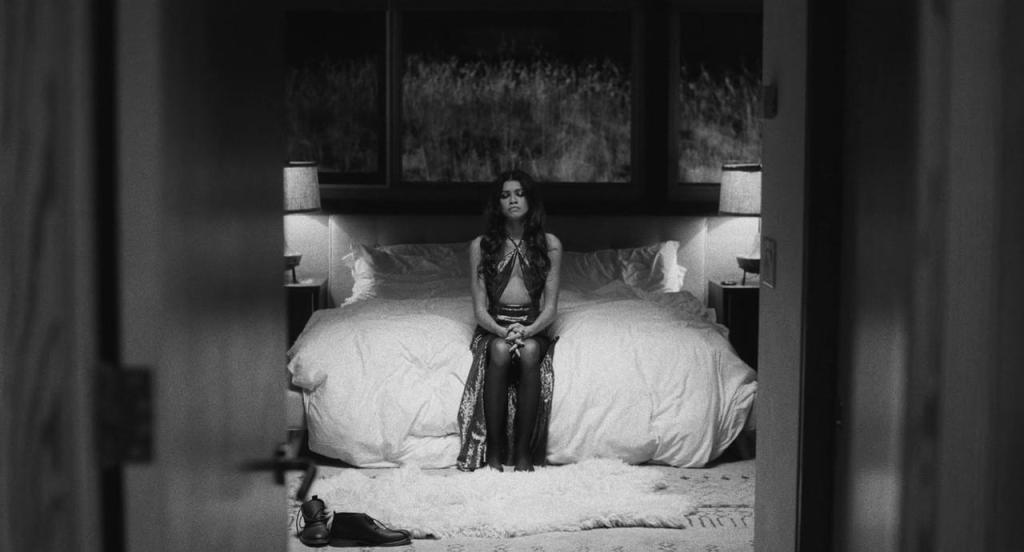
While it is true of most good acting that movement, or stillness, within a space dictates pace and character dynamics, the simplicity of two characters, alone in a house for the entirety of the film, places the house under a spotlight. Over the course of the evening, their argument becomes inextricable from the building, spatial significance tying our characters’ pain to the bathtub, the bed, and the patio. With each echoed shout, each hurtful lap of the living room the house becomes a part of the argument. Malcolm & Marie & Caterpillar House.
 Laurence Łucasz