Collaborative Project
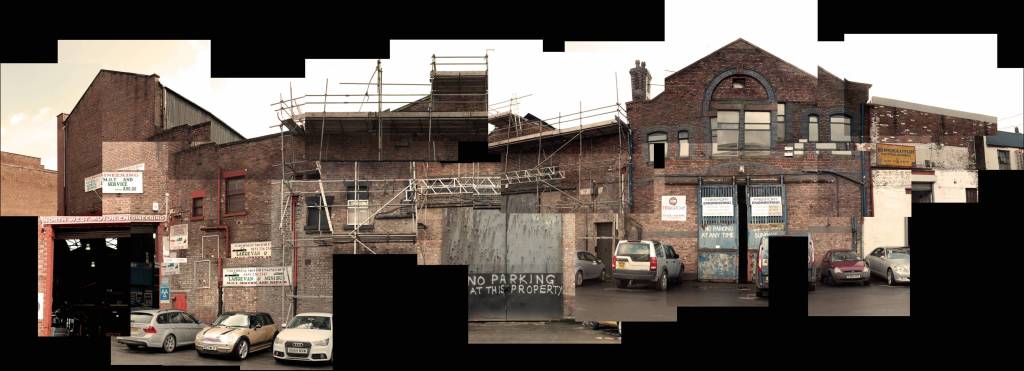
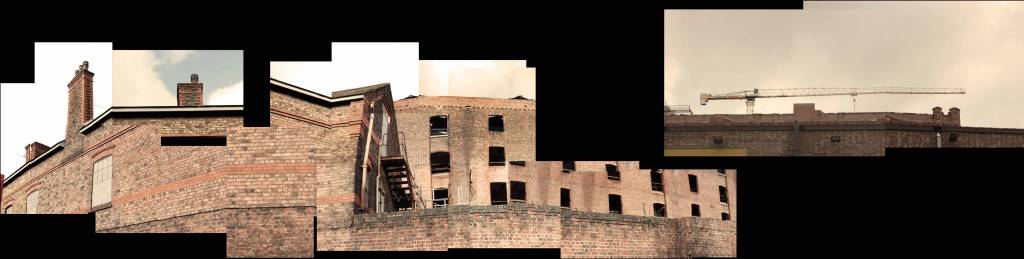
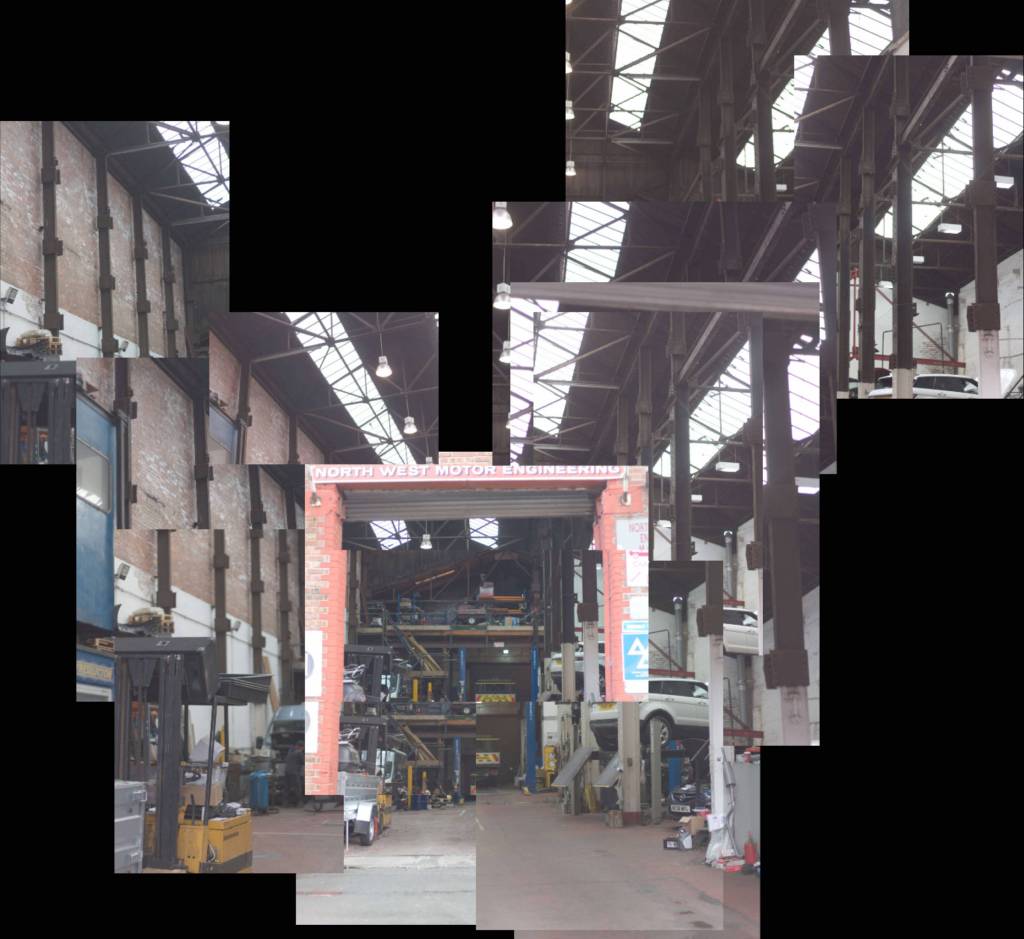
Photomontaging from site (my work)
Identified characteristics were exposed pipe work, steel-frame warehouse typology, predominantly naturally lit from skylights, with large ground-level openings
Having identified the coffee house as a significant historic Liverpool dockland congregation point, we sought to update the typology and integrate means of coffee production into the architecture.
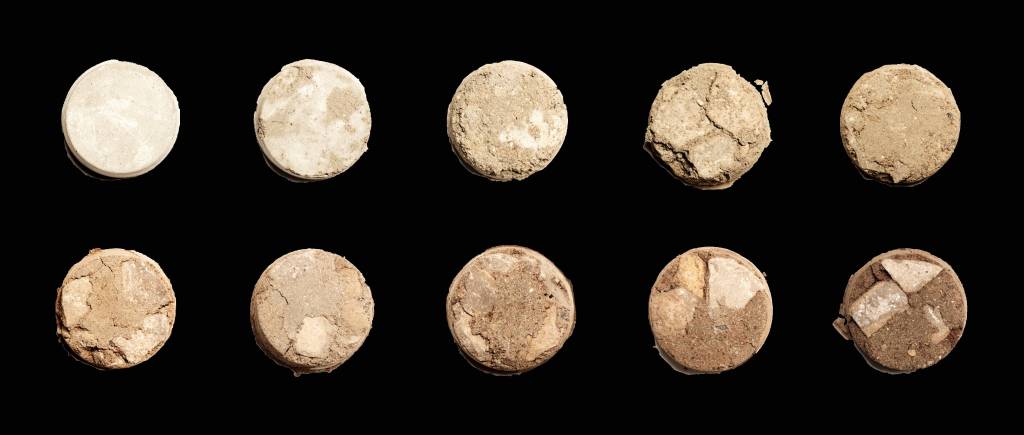
Coffee-crete experiments (my work)
In an effort to integrate coffee into the construction, reduce coffee-ground waste, and provide a more sustainable alternative to concrete, aggregate in the composition was substituted with used coffee grounds. These material experiments detail integrity with different amounts of aggregate substitution (10% to 100%, left to right, top to bottom).
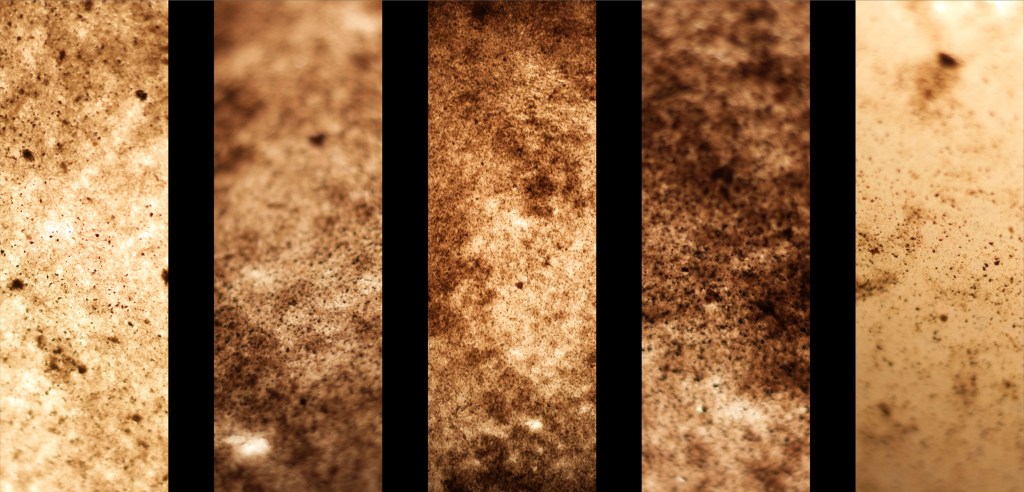
Recycled coffee paper (my work)
With dockland coffee houses having a history of clandestine meetings and shady dealings, we decided to integrate shoji-screen-like paper divisions between booths. These experiments test properties of recycling paper while adding used coffee-grounds, which give a texture to light permeability and smell like coffee too.
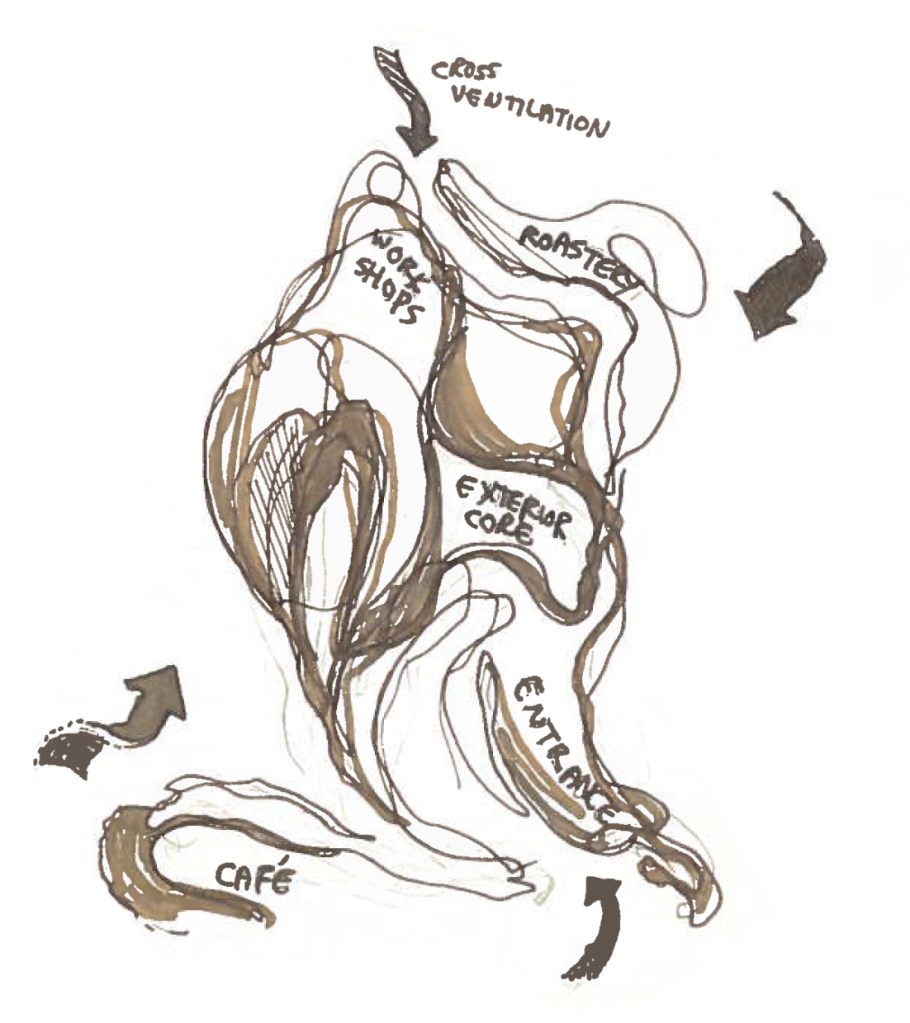
Plan conceptualisation (collaborative)
Taking inspiration from steam rising off a cup, the plan is largely organic and flows from the street at the south of the site to the street at the north.
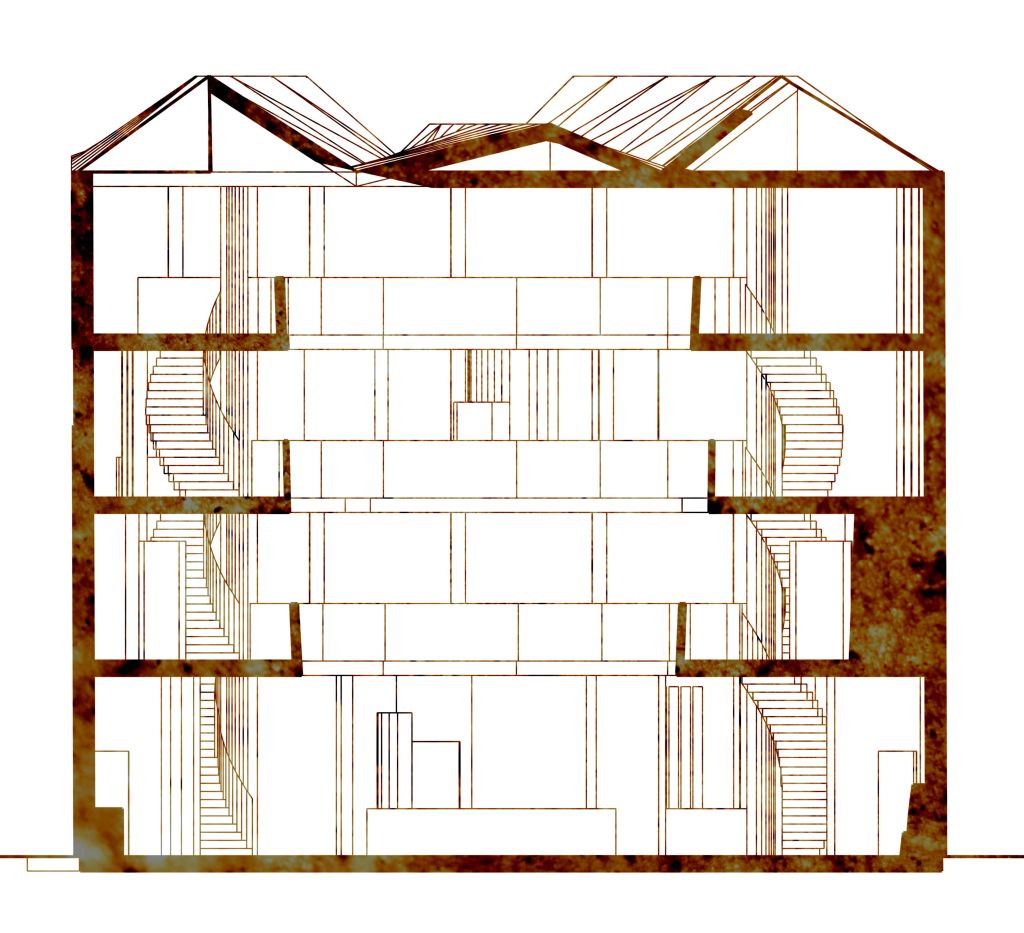
Section (not my work)
Drawing from the low-pitch skylight roofs of the adjacent warehouses, the central atrium lets light permeate the space from above, while rain collection systems channel water through pipework down next to the stairways.
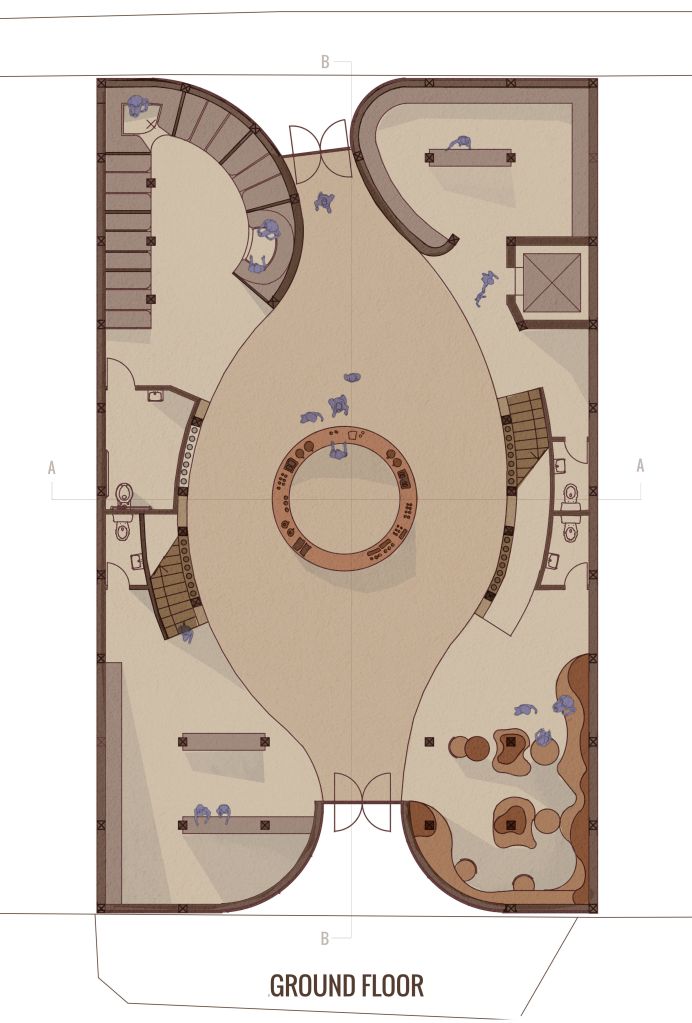
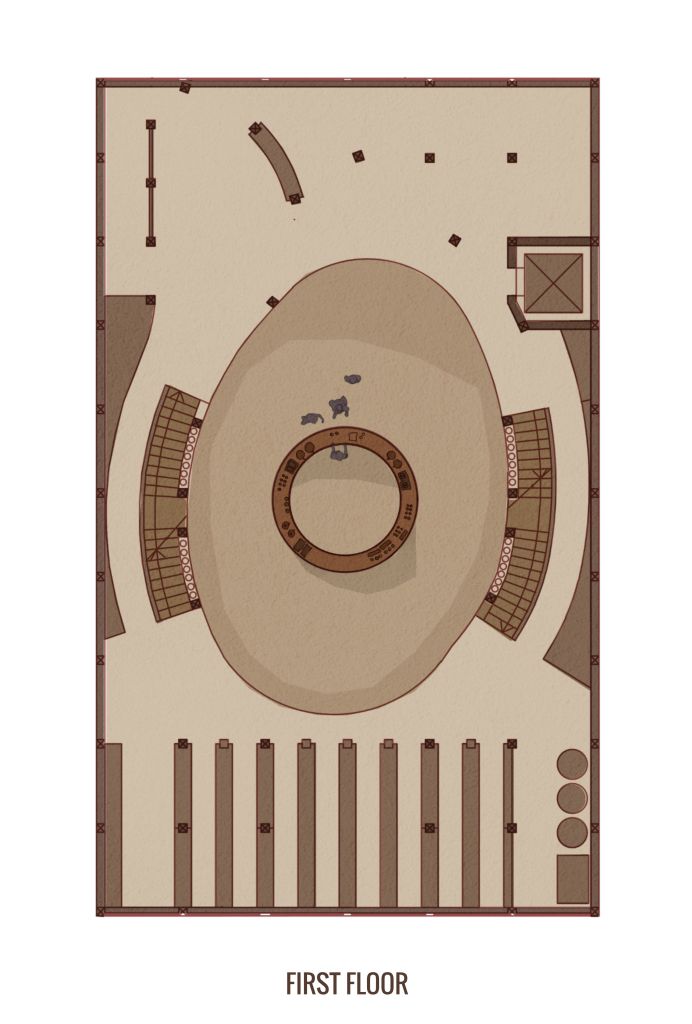
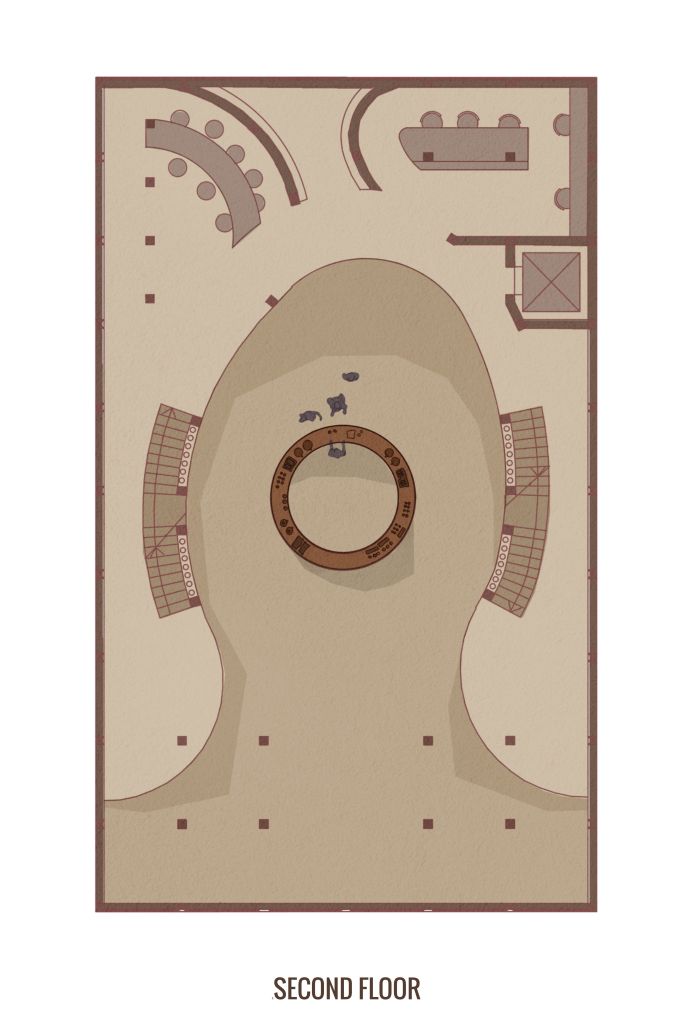
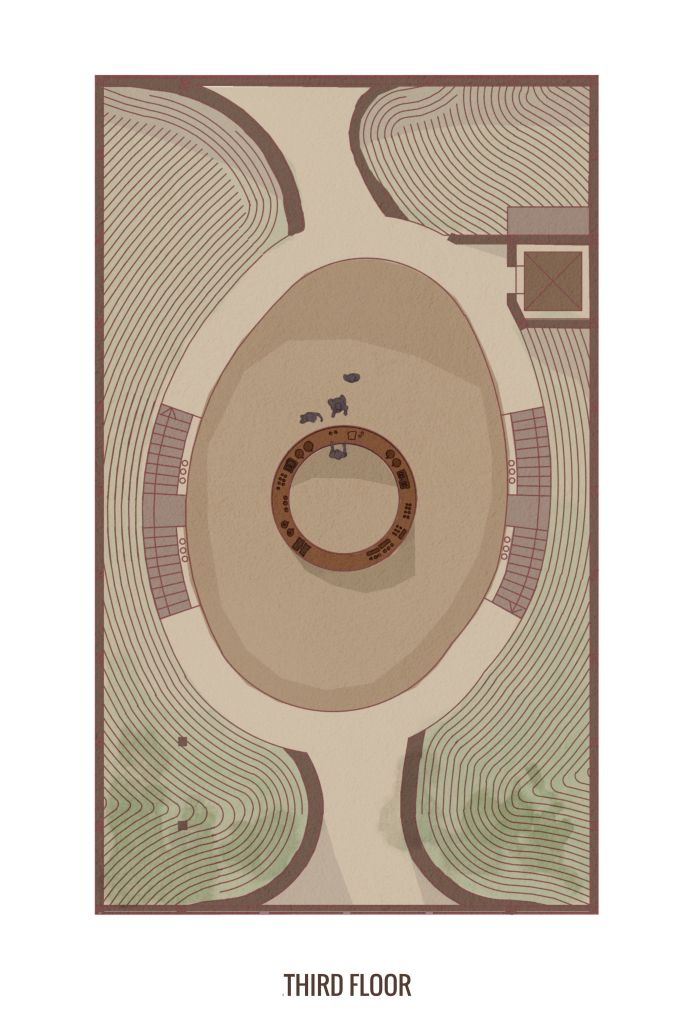
Plans (collaborative)
Highlighting the central atrium and organic geometries, the plan drawings show function from seating and serving at ground level, through roasting and workshop space, to bean growing at the top level.
 Laurence Łucasz